How Harley Davidson Joyrides Began in the Early 1990s
A Harley ride has always offered more than transport. The sound, the low seat, the wide bars, the chrome, the open road and the sense of occasion all made the motorcycle feel like an experience before anyone sold it as one.
In the early 1990s, a small but telling shift took place. Several Melbourne Harley owners realised that people were prepared to pay for passenger rides. These were not full motorcycle tours at first. They were simple joyrides, often starting at around one hour and sometimes stretching to half a day or a full day when the passenger wanted more.
That idea seems obvious now, but at the time it was clever. Many people admired big American cruisers from the footpath, at rallies, outside pubs, at charity runs or parked along coastal roads. Far fewer had the licence, confidence or money to ride one themselves. A paid passenger ride gave them access to the feeling without the commitment of ownership.

The idea started with curiosity and a spare seat
The early Harley joyride was built around one plain observation. People were curious.
A Harley owner could stop for fuel and draw questions. What does it feel like on the open road? Is it loud when you are sitting on it? Is it comfortable? Does it feel heavy? Can you take passengers? Quite often, the most honest question sat underneath all the others: what would it be like to go for a ride?
For owners who already enjoyed taking friends for short runs, the next step was not a large business plan. It was a practical thought. If strangers were asking for rides, and if some were willing to pay, then the motorcycle’s pillion seat had value.
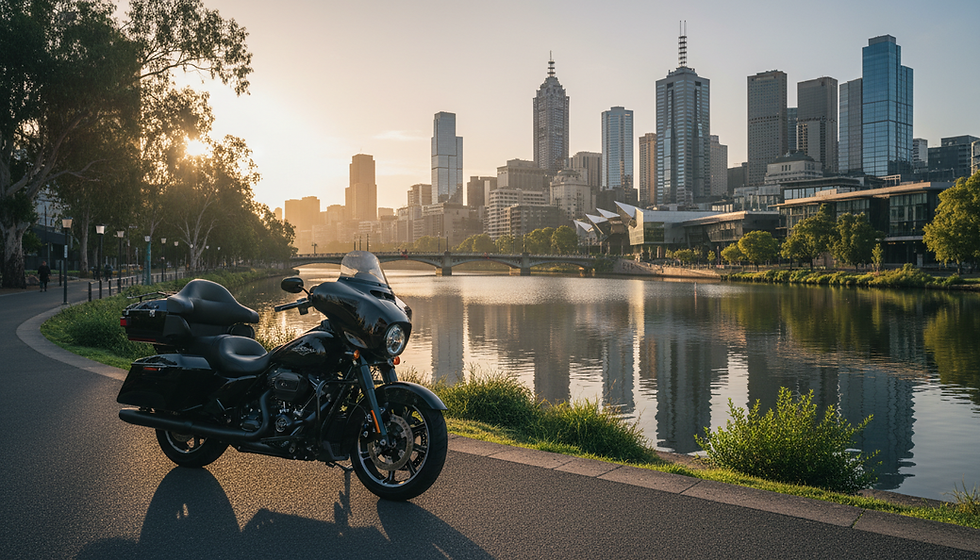
That spare seat became the centre of the experience. For passenger comfort, a back rest (also known as a "sissy bar") gave passengers a sense of safety and security. The addition of "running boards" rather than pillion pegs was another feature common to most bikes in the Harley Ride Industry.
Customers were provided with a leather jacket, helmet and gloves to protect them from the elements. Protective eye ware was mandatory and passengers were required to wear sunglasses or would be provided with a pair if they didn't have their own.
The first paid rides were usually modest. A one-hour ride gave passengers enough time to settle in, feel the engine, get used to cornering and enjoy a few stretches of open road. For many people, that was enough. It offered a story, a memory and a taste of motorcycling from a safe passenger position.
Longer rides followed naturally. Some passengers wanted to ride along the coast, through country towns or towards a favourite lookout. Others booked the experience as a gift for friends. A few wanted a full day because the ride itself was the event.
This is how Harley Davidson joyrides evolved to become a recognisable service. Many would be surprised about the many requests that have been made that involve joyrides. This is a entire subject that will be covered in future Blog posts.
Why the early 1990s was the right moment
The timing mattered. The early 1990s had the right mix of motorcycle culture, public interest and changing attitudes to leisure experiences.
By then, the Harley image was well established. It was tied to freedom, long roads, big engines and a certain kind of theatre. Even people who knew little about motorcycles understood the appeal. A Harley was not just a machine. It carried a mood.
At the same time, many people were starting to spend money on experiences rather than only on objects. Short adventure activities, scenic flights, hot-air balloon rides, winery tours and weekend getaways all fitted that wider pattern. Paying for a motorcycle passenger ride made sense inside that shift.
A Harley ride also had a low barrier to entry compared with learning to ride. The passenger did not need a motorcycle licence. They did not need to buy riding gear beyond what the operator supplied or required. They did not need to understand clutch control, road positioning or parking a heavy bike.
They could simply get on, listen to the safety briefing and enjoy the ride.
That simplicity made the idea easy to sell by word of mouth. One passenger could return from a one-hour ride and tell a dozen people about it. The sound and sight of the motorcycle did the rest.
The first rides were personal rather than polished
The early operators were often riders first and business owners second. That shaped the whole experience.
They were not usually trying to create a slick tourism product. They were sharing the feeling they already loved. A ride might begin with a chat in a driveway, outside a motorcycle shop, at an event or near a local landmark. The route might depend on weather, traffic, daylight and what the passenger hoped to see.
That personal style was part of the charm.
The rider knew the machine. They knew which roads flowed well, where to stop for a photo and which corners felt comfortable with a passenger. They also knew how to calm nerves before the engine started.
A good operator learnt to read the passenger quickly. Some wanted a gentle cruise. Some wanted the rumble and presence of the bike but still felt nervous. Others arrived grinning and ready for a longer run.
The ride had to match the person on the back.

One hour was the perfect starting point
The one-hour ride became the natural entry point because it balanced cost, comfort and excitement.
For a passenger, an hour felt substantial. It allowed time for more than a quick loop around nearby streets. The ride could include town roads, a scenic stretch and a short stop. It also reduced the chance of fatigue, especially for people who had never sat on a motorcycle before.
For the rider, an hour was manageable. It made scheduling easier and kept the bike in use without turning every booking into a major expedition. It also gave the operator time to check gear, brief the passenger and prepare for the next ride.
A typical short ride might include:
A welcome and basic safety briefing
Fitting a helmet and any required protective gear
Explaining how to sit, hold on and move with the bike
A steady start on quiet roads
A scenic section where the passenger could relax
A photo stop or short break
A return ride at a comfortable pace
This pattern worked because it respected both the thrill and the responsibility of carrying a passenger.
The passenger did not need to know every detail of riding. They did need clear, calm instructions. Where to place their feet. When to stay still. How to avoid leaning the wrong way. How to signal if they felt uncomfortable.
Trust was the real product. The motorcycle created the excitement, but the rider’s judgement made the experience enjoyable.
Full-day rides turned the joyride into a journey
Once short rides proved popular, longer bookings became the obvious next step.
A full-day ride changed the nature of the experience. It was no longer just a taste of the Harley feeling. It became a day out built around roads, scenery, food stops and shared rhythm.
In Australia, that could mean coastal roads, hinterland climbs, winery regions, mountain lookouts or quiet country highways. The details varied by region, but the appeal was consistent. The passenger could spend a day close to the road and weather, without needing to ride the motorcycle themselves.
Longer rides also attracted different occasions. Birthdays, anniversaries, milestone gifts and bucket-list experiences all suited a full-day format. Some passengers booked because they had always wanted to ride on a Harley. Others booked for someone else who had talked about it for years.
The full-day format required more planning. Operators had to think about fuel, food, rest stops, comfort, weather changes and passenger stamina. A person who enjoyed one hour might not enjoy six hours without breaks. The best rides allowed time to stop, stretch and take in the route.
This is where the idea began to resemble small-scale touring. The motorcycle remained central, but the route and hosting mattered more.
Safety shaped the service as it grew
Carrying a paying passenger changed the responsibility of the rider. It was no longer just a favour for a mate. It involved duty of care, clear communication and, over time, more formal safety practices.
The basics mattered from the start:
A roadworthy motorcycle suited to carrying a passenger
A skilled, licensed rider with strong low-speed control
Correct passenger foot pegs and seating
Proper helmets and suitable protective clothing
Clear instructions before moving off
Sensible route choices for the passenger’s comfort
Weather played a big role too. Rain, wind, heat and poor visibility could turn a pleasant ride into a hard one. Operators had to make judgement calls. A safe cancellation or reschedule often protected the long-term reputation of the service.
There was also the issue of insurance and local regulation. As the idea became more commercial, riders needed to treat it as a proper paid activity rather than a casual lift. Requirements could vary by place and time, so serious operators had to check what applied to them.
That shift made the sector more professional. It helped separate careful ride providers from people who only saw quick money in the spare seat.

The appeal was emotional as much as mechanical
The success of early Harley joyrides cannot be explained by the motorcycle alone. Many bikes can carry a passenger. Many bikes can travel scenic roads. The Harley experience sold something more emotional.
The sound created anticipation before the ride even began. The seating position made the passenger feel part of the machine rather than sealed away from the world. The slower, heavier rhythm of a cruiser suited scenic riding. The bike invited attention at stops, which made the passenger feel part of the occasion.
For some, the ride connected to films, music and old dreams of the open road. For others, it marked a personal moment. A birthday. A recovery. A retirement. A tribute to someone who loved motorcycles. A first experience after years of saying, “One day.”
The passenger did not need to become a rider for the experience to matter. In some cases, the point was that they could enjoy the feeling without taking on the risk, cost and learning curve of owning a motorcycle.
That emotional pull explains why the rides could stretch from one hour to a full day. Once someone felt comfortable, they often wanted more road.
Word of mouth carried the idea further
Early joyride services did not need large campaigns to gain attention. The motorcycle itself was visible, loud and memorable. A passenger getting off a Harley after a paid ride was likely to talk about it.
Photos helped too, even before every moment lived online. A picture beside the bike gave passengers proof of the experience. It made the ride giftable and shareable in the old-fashioned sense, through albums, fridges, noticeboards and conversations.
Motorcycle events, tourist areas and weekend routes gave operators natural places to be seen. A rider offering paid passenger experiences did not have to explain the whole concept for long. People could understand it in seconds.
The offer was simple:
Sit on the back of a Harley
Take a scenic ride
Choose a short run or a longer trip
Enjoy the feeling without needing to ride yourself
That clarity helped the idea last.
From informal rides to organised experiences
As demand grew, the service became more organised. Operators began to think about bookings, route options, gear, pricing, passenger comfort and presentation.
The core offer stayed simple, but the expectations rose. A passenger paying for a ride wanted confidence as well as excitement. They wanted the rider to be calm, the bike to be clean, the gear to fit and the plan to feel considered.
That led to clearer ride types. A short city or coastal ride. A longer scenic escape. A special occasion ride. A full-day touring experience. Some operators leaned towards tourism. Others focused on gifts and private bookings.
The early 1990s idea had matured, but it still rested on the same discovery: people who loved the look and sound of a Harley were happy to pay for the chance to feel it from the pillion seat.

Why the early idea still feels fresh
The beginning of Harley joyrides in the early 1990s shows how a small insight can create a lasting experience. The owners did not invent the pleasure of riding pillion. People had been riding as passengers for as long as motorcycles had carried two people. What changed was the decision to offer that feeling as a paid, structured ride.
That change opened the door for people who had always admired motorcycles from a distance.
A one-hour ride gave them a taste. A full-day ride gave them a memory. The best operators added safety, judgement and local road knowledge. The Harley supplied the sound and presence, but the human part made it work.
The story also explains why these rides have remained appealing. They are direct, physical and easy to understand. No complicated equipment. No long training period. Just a rider, a passenger, a capable machine and a road worth taking.
The early Harley owners saw value where others saw an empty seat. That was the beginning of the joyride business, and it remains the reason the idea still makes sense today. If you want to book a Harley Ride call Austin 0494 533 002.


Comments